What is process automation?
Automating a process means handing a software tool a series of steps someone used to do by hand: the delivery note that creates the invoice, the late order that triggers an alert, the day's figures sent automatically on WhatsApp. The work does not change; what changes is that nobody has to think about it any more.
What we automate most often in an SME
The clearest gains come from frequent, simple tasks with no exceptions:
- Daily reports, sent automatically to the owner, even remotely.
- Supplier or customer reminders, prepared as soon as a deadline approaches.
- Quote, delivery note and invoice linked together, with no retyping.
- Alerts before a stock-out or a late delivery.
- Figures consolidated from several outlets or resellers.
- Requests received on the website routed to the right person.
Already running in our software
These automations run today in software designed by Kazi:
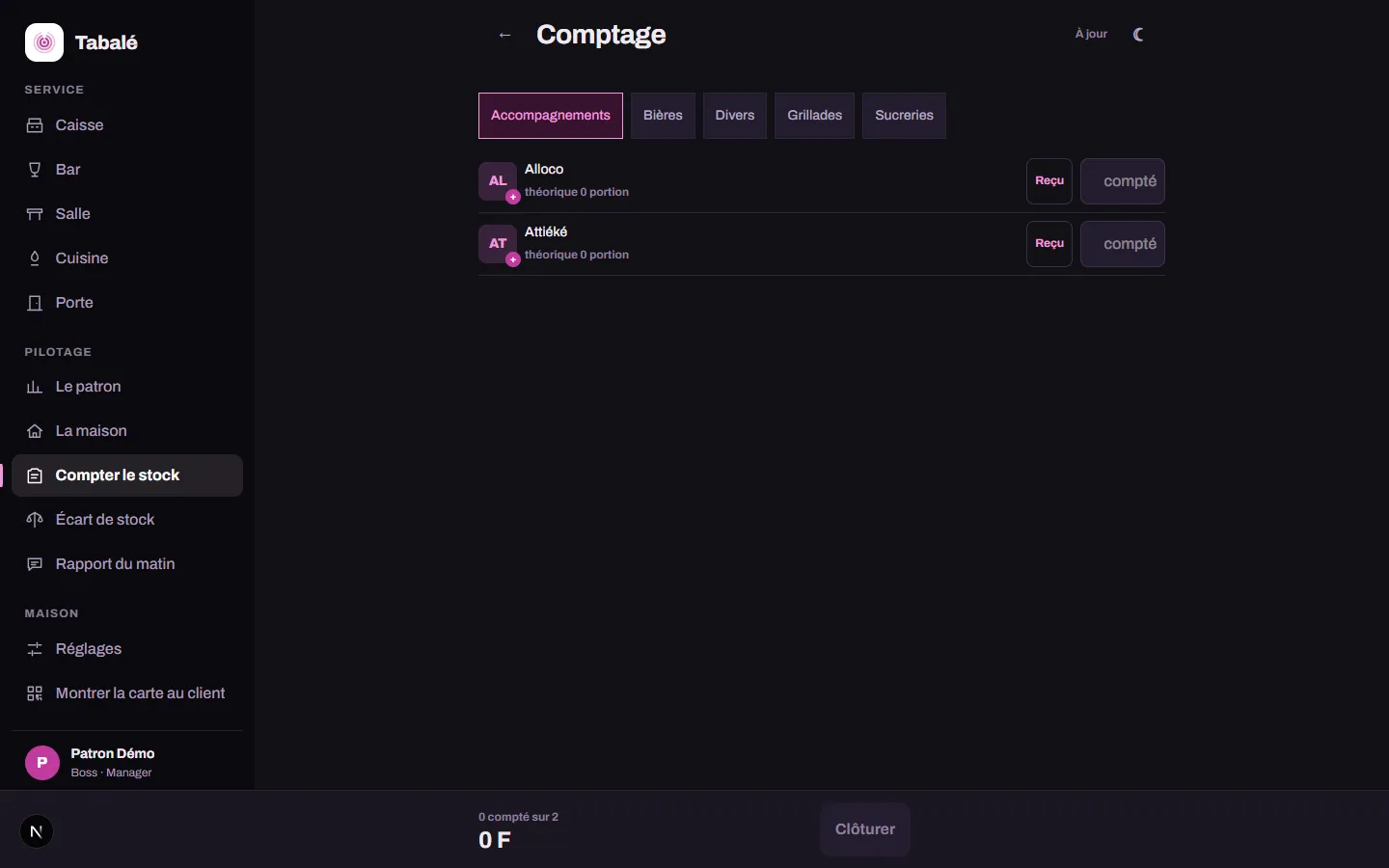
- Tabalé counts the gap between a bar's stock and till every night, then prepares the morning report, ready to go out on WhatsApp.
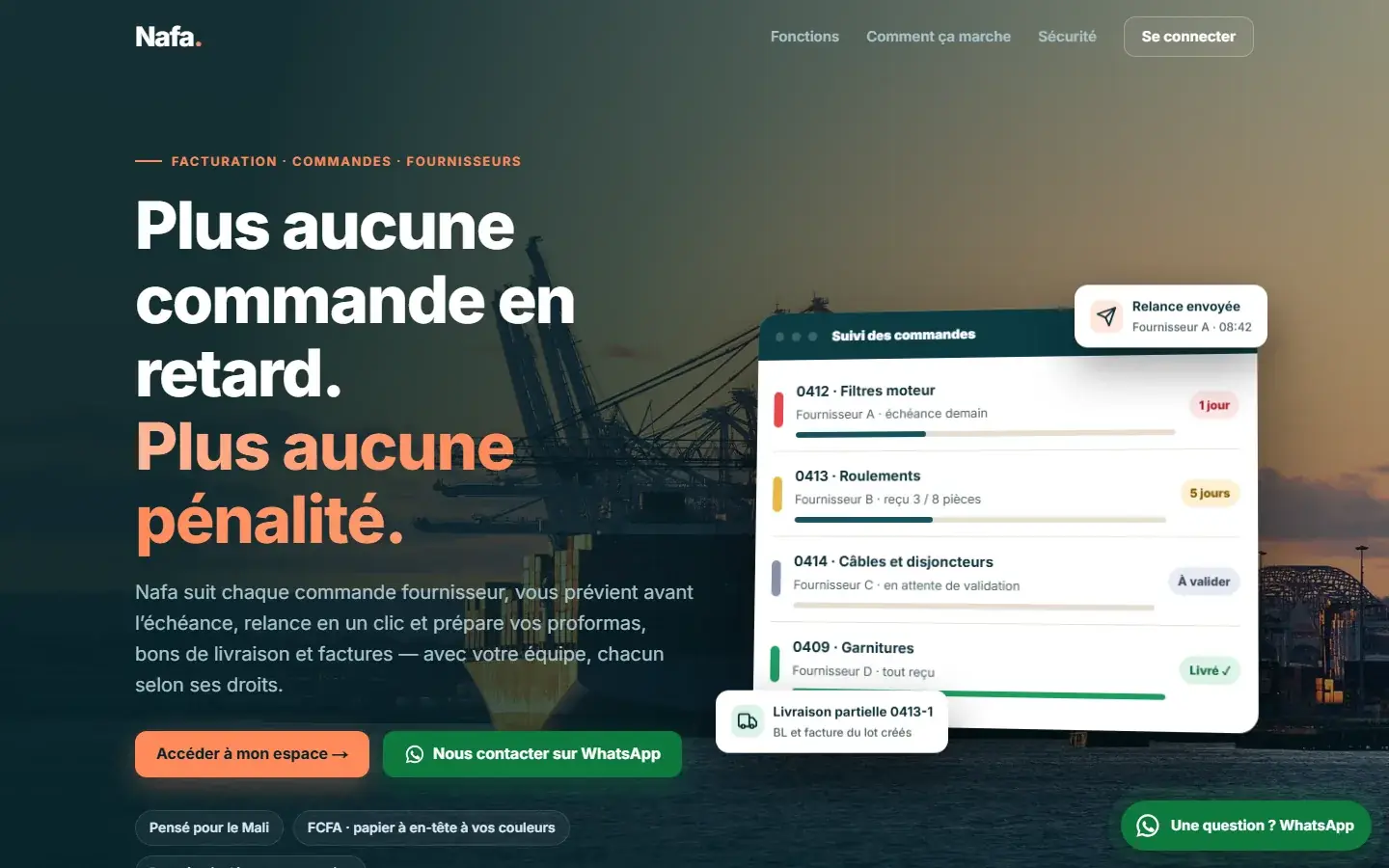
- Nafa colours each supplier order by its deadline, warns before the delay and prepares the reminder in one click.
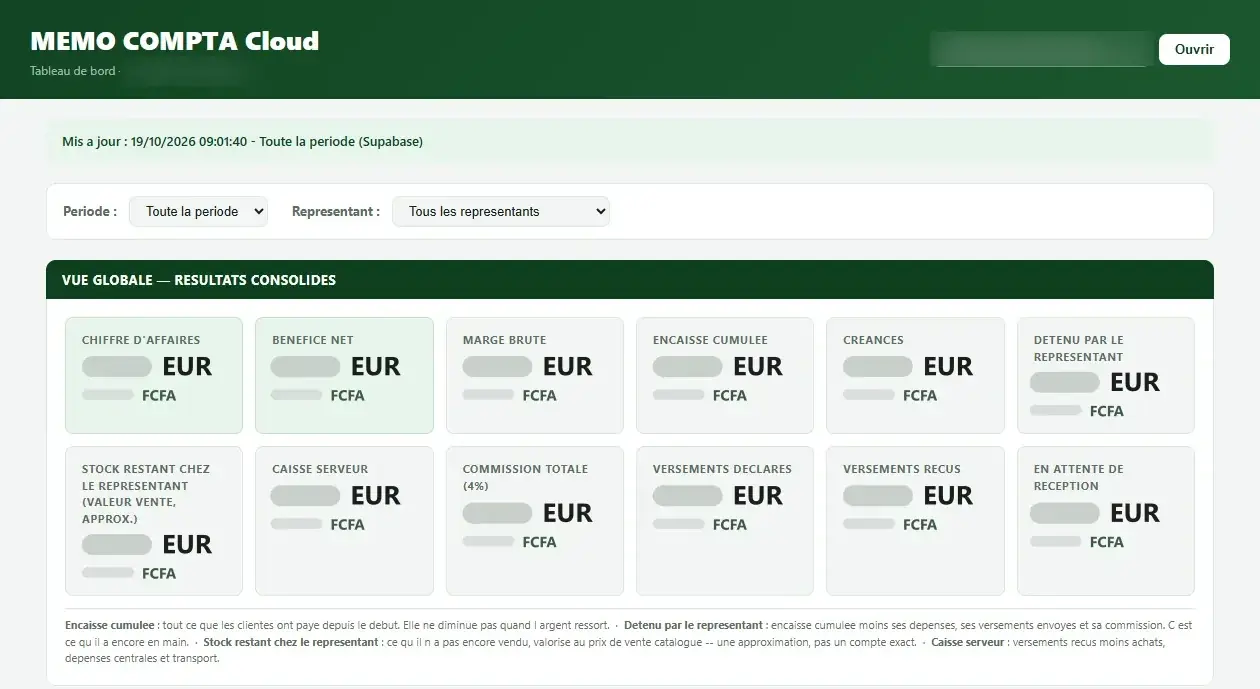
- Memo Compta brings the activity of several sales reps into one dashboard.
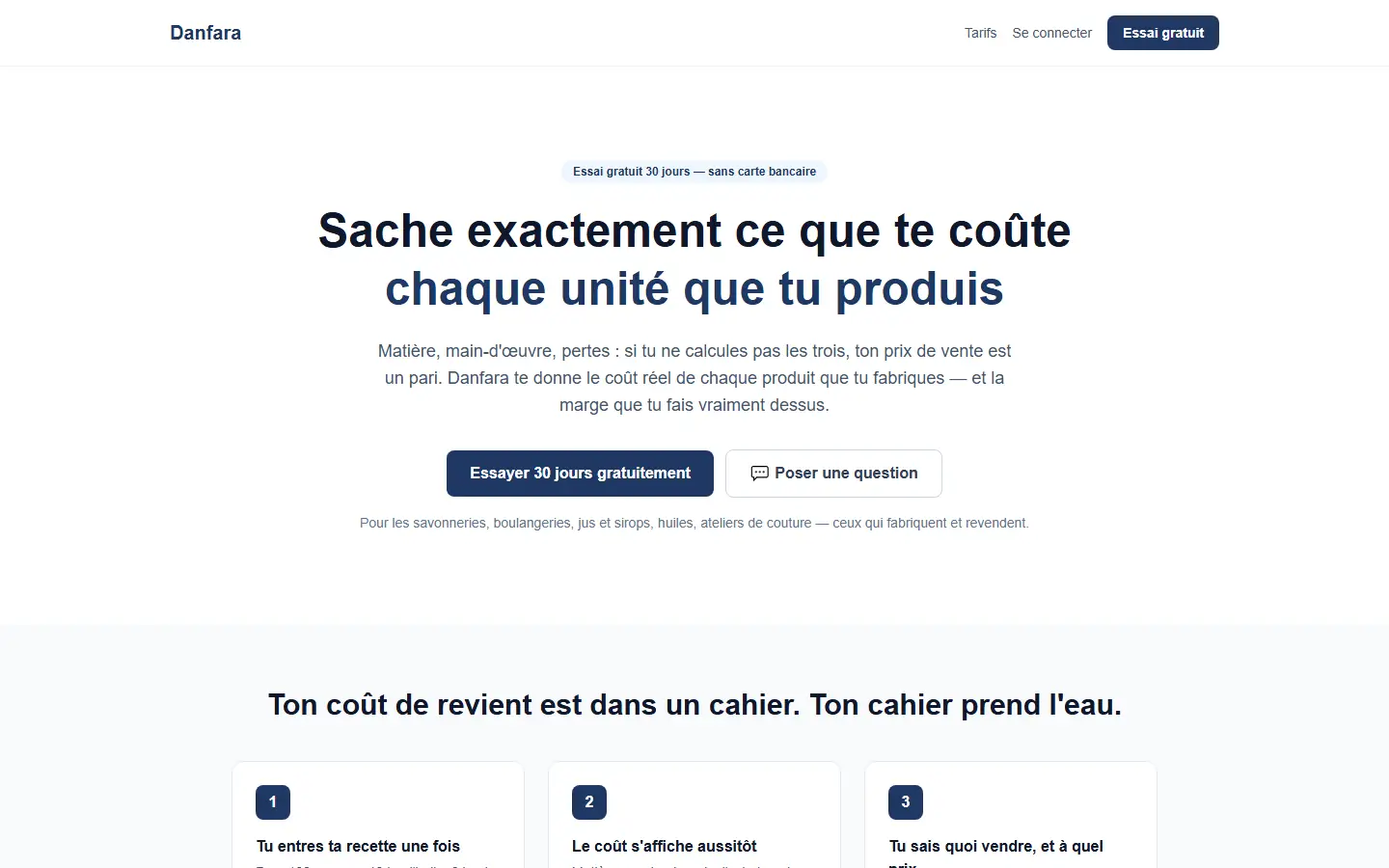
- Danfara recalculates the cost price as soon as a purchase price changes.
What is better left manual
A rule that changes every month, a procedure everyone describes differently, a decision that needs judgement: in these cases automation freezes the mess instead of fixing it. So we first write the process down with you, then automate only what is stable.
Our method
We rank your tasks by three criteria: how often they come back, how long they take, how many people they occupy. The most profitable go first, the others wait.
- List the repetitive tasks with the people who do them.
- Pick the most profitable one and write it down step by step.
- Automate it in your tools or in suitable software.
- Check the result for a few weeks, then move on to the next one.
How much does it cost?
The price depends on the number of steps, the tools to connect and the volume handled. A simple automation can start small and grow later. The quote is drawn up after a first conversation, with no commitment on your side.